
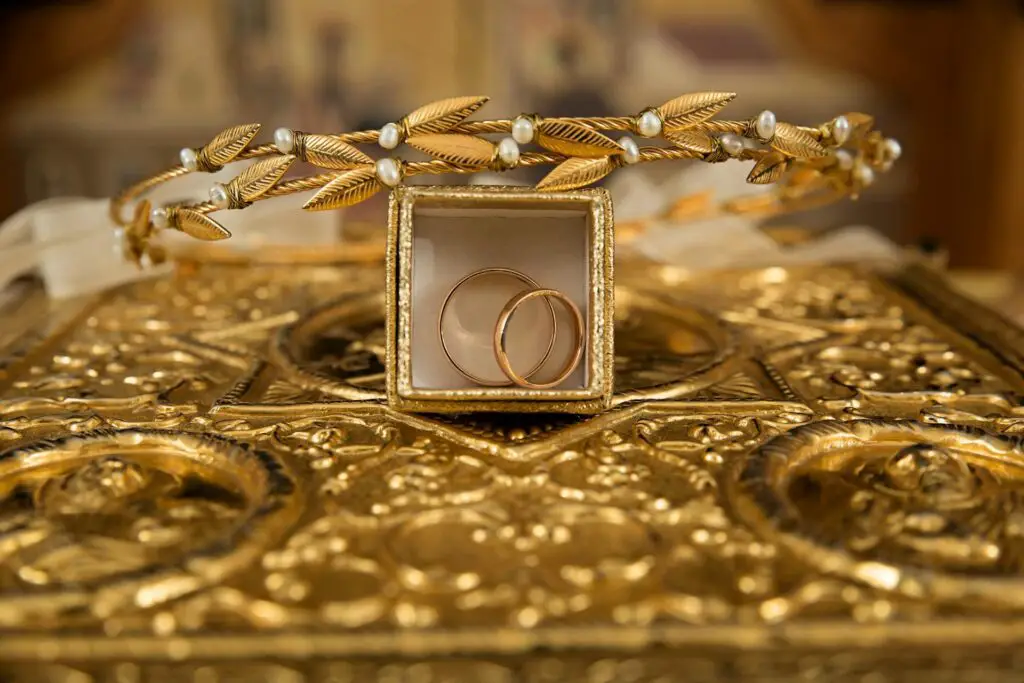
Gold is more than just a shiny metal. It’s a symbol of power, wealth, and permanence. For over 5,000 years, societies across the globe have valued gold—not only for its beauty, but for its rare ability to transcend time, borders, and belief systems. In an age of digital money and decentralized finance, it’s easy to forget that this elemental metal shaped the very foundations of our economies, empires, and ideologies.
This is the story of how gold developed its value in society—why it was chosen, how it spread, and why it continues to hold power even in today’s technologically driven world.
Gold in Prehistoric and Ancient Societies
Gold’s journey begins not in vaults or jewelry stores, but in riverbeds and sacred rituals. The first known discovery of gold dates back to around 4000 BCE in the Balkans, where Neolithic cultures crafted simple decorative pieces from alluvial gold. Early societies didn’t use gold for trade—they revered it for its mystical, divine qualities.
Unlike iron or bronze, gold didn’t corrode. It didn’t fade or tarnish. To the ancient mind, this was no ordinary metal—it was something otherworldly. Egyptians believed gold was the flesh of the gods, especially the sun god Ra. Pharaohs were buried in gold masks and sarcophagi not just for wealth, but as a form of eternal preservation.
In Mesopotamia, Sumerians and Akkadians crafted gold jewelry and ceremonial items to symbolize status and connect the human realm to the divine. Gold’s rarity, malleability, and visual brilliance made it an ideal symbol for kingship, sacrifice, and spiritual continuity.
But its transformation into a medium of exchange took time.
From Symbol to Currency: The Lydians and the Birth of Gold Money
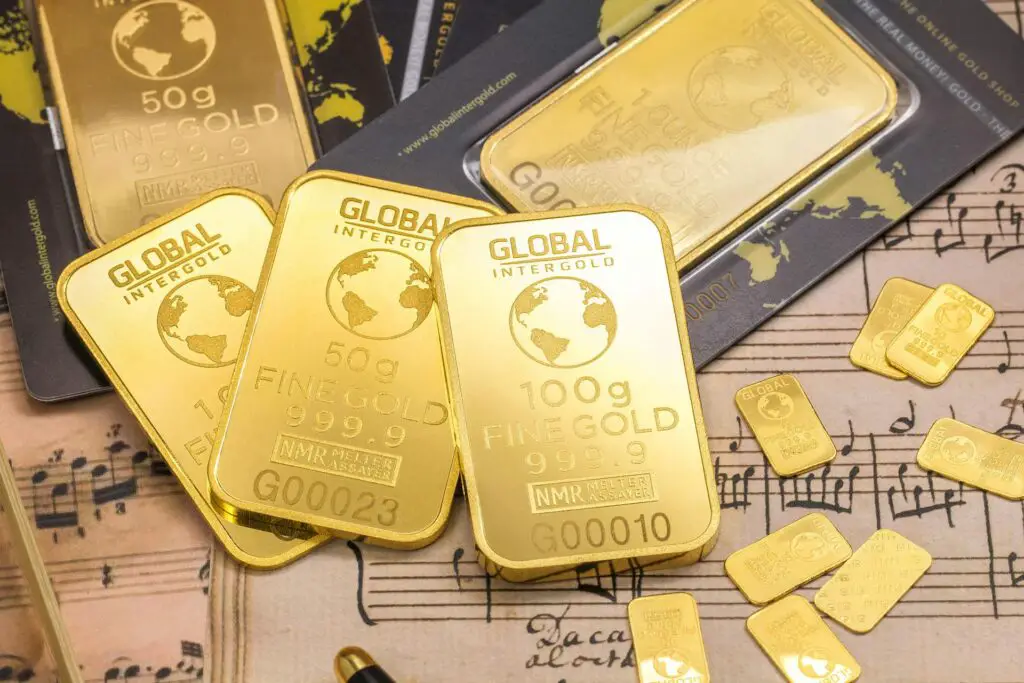
The real economic value of gold began to emerge around 600 BCE, when the kingdom of Lydia (in what is now western Turkey) minted the first true gold coins. The Lydians mixed gold with silver to create electrum coins, later evolving into standardized gold coinage under King Croesus.
This was revolutionary. For the first time, a portable, divisible, and universally accepted form of gold allowed goods and services to be exchanged across regions. Gold now had intrinsic value not just because of religious or cultural symbolism—but because it became a unit of account, medium of exchange, and store of value.
From Lydia, gold coinage spread to Persia, Greece, and eventually Rome. Roman emperors standardized gold coin issuance (the aureus, and later the solidus), using it to pay soldiers, fund conquests, and stabilize their economy. Gold had become imperial—not just a metal, but the economic foundation of global power.
Gold’s Role in Religion, Empire, and Exploration
By the medieval period, gold was deeply intertwined with religion and political legitimacy. Churches across Europe hoarded gold for crosses, chalices, and reliquaries, reinforcing their divine authority. At the same time, monarchs claimed divine right to rule—and gold was their proof.
Gold also fueled one of the most violent periods of expansion in history: the Age of Exploration. When the Spanish reached the Americas in the 1500s, they were driven by the quest for “God, glory, and gold.” Massive amounts of gold (and silver) were extracted from indigenous civilizations like the Aztecs and Incas, melted down, and shipped back to Europe.
This influx reshaped global trade but also triggered inflation and warfare across the continent. Gold had become a double-edged sword: a source of imperial wealth and a catalyst for geopolitical conflict.
Gold and the Foundation of Modern Finance
As global trade expanded, so did the need for trust. Gold provided it.
During the 17th and 18th centuries, banking systems emerged to facilitate trade across distances. Because gold was heavy and risky to transport, banks began issuing paper certificates that represented claims on gold reserves. These certificates eventually became banknotes.
By the 19th century, the Gold Standard was formalized. Under this system, nations agreed to fix their currency to a set amount of gold. This provided international stability, predictability, and trust—essential for industrial capitalism and global trade.
For example, one British pound sterling was backed by a fixed weight of gold. The U.S. dollar, French franc, and German mark all followed suit. Gold had moved from temples and treasure chests into the vaults of central banks.
During this era, gold became the anchor of trust in the global monetary system.
The Decline of the Gold Standard
The Gold Standard wasn’t perfect. In times of crisis—like World War I—countries suspended it to print money for war. During the Great Depression, many nations again abandoned the standard to devalue their currencies and stimulate recovery.
In 1944, after World War II, the Bretton Woods Agreement created a new system: the U.S. dollar would be backed by gold, and all other currencies would be pegged to the dollar. This placed enormous power in the hands of the U.S., which held most of the world’s gold reserves.
But in 1971, President Richard Nixon officially ended dollar convertibility to gold, closing the “gold window” and effectively ending the Bretton Woods system. The world shifted to fiat money—currency backed by government decree, not gold.
Gold was no longer money, legally speaking. But its value didn’t vanish.
Why Gold Still Holds Value Today
Despite losing its formal role in global currency systems, gold remains a dominant asset class. It’s held by central banks, hedge funds, and retail investors. It’s traded on global markets, tracked in ETFs, and stored in vaults from London to Zurich.
Why?
Because gold is still:
- Scarce: Only a limited amount exists, and mining it is costly
- Durable: It never corrodes or decays
- Recognizable: Universally valued across cultures
- Independent: Not tied to any single government, currency, or policy regime
Gold has also proven itself during crises:
- After the 2008 financial collapse, gold surged over 150% in 3 years
- During the COVID-19 pandemic, it hit all-time highs above $2,000/oz
- In 2025, amid geopolitical tension and inflation fears, it crossed $3,400/oz
Its value doesn’t come from legal status, but from 5,000 years of collective trust. That’s rare. Very few assets—digital or physical—can make such a claim.
Gold in the Digital Age
In recent years, Bitcoin and other cryptocurrencies have challenged gold’s monopoly on the “store of value” role. Bitcoin is often called “digital gold” due to its capped supply, decentralized issuance, and similar anti-inflation thesis.
Yet, as seen in times of sudden crisis, gold still outperforms crypto as a flight-to-safety asset. Central banks buy gold—not Bitcoin. Institutions hedge portfolios with gold—not Dogecoin.
But this doesn’t mean gold is static. New forms of ownership have emerged:
- Tokenized gold (e.g., PAXG, Tether Gold) allows trading gold via blockchain
- Gold ETFs make exposure simple for retail investors
- Vaultless gold accounts let you buy/sell instantly, like digital cash
The digital age hasn’t killed gold—it’s adapted.
Conclusion: Gold’s Value Was Never Just Economic
Gold’s value in society wasn’t forged in spreadsheets or policy debates. It was shaped by thousands of years of belief—first religious, then symbolic, then financial. Its glow carried power long before it backed currencies or balanced trade. Its scarcity gave it credibility. Its permanence made it trustworthy. Its universality made it global.
In a world where fiat money can be printed endlessly, and digital assets are built on code, gold remains one of the few anchors of human economic history.
Not because it has to be.
But because for millennia, we chose it.
Gold’s Role in Modern Central Bank Policy
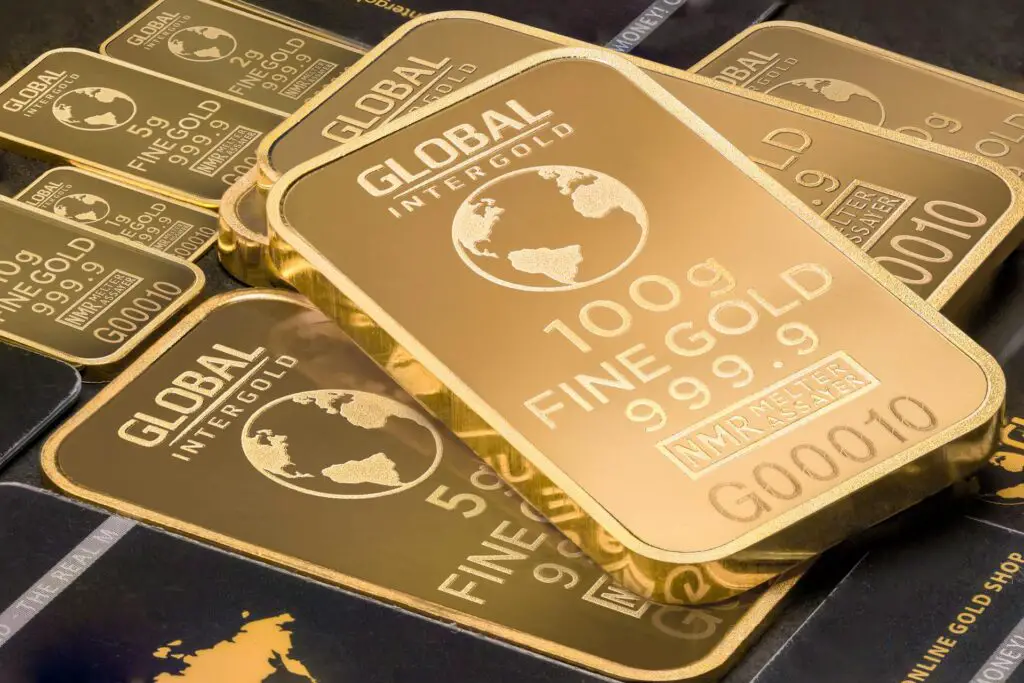
Even after gold was removed from official currency systems, it never left the balance sheets of the world’s most powerful institutions. Today, central banks around the globe collectively hold more than 35,000 metric tons of gold, valued at trillions of dollars. Why? Because even in the age of fiat and quantitative easing, gold remains the ultimate form of monetary insurance.
The countries buying the most gold in recent years are not always those you’d expect. Nations like China, India, Turkey, and Russia have aggressively accumulated gold to reduce reliance on the U.S. dollar and diversify their reserves. This strategy, sometimes called de-dollarization, reflects a broader shift in global finance. In times of currency conflict, sanctions, or financial instability, gold provides something no fiat currency can—neutral value outside of political control.
Western countries, especially the U.S., UK, Germany, and France, also continue to hold massive reserves—though they rarely discuss them. The reality is simple: gold acts as a geopolitical hedge, a last resort in case of systemic currency failure, war, or international dislocation.
In this way, gold is not just a relic of the past. It’s a strategic tool of the present, quietly maintained by the same institutions that publicly advocate for fiat-based policy regimes.
The Investment Case: Why Gold Still Belongs in Portfolios
For individual investors, gold has long served as a hedge against inflation, a store of wealth, and a stabilizer during market turbulence. But its role is often misunderstood. Gold doesn’t generate income, doesn’t grow like equities, and doesn’t compound. So why do seasoned investors always include gold in balanced portfolios?
The answer lies in correlation and resilience.
Gold typically has low or negative correlation with stocks, bonds, and real estate. When traditional markets crash, gold tends to hold its value or rise—especially during credit shocks or periods of monetary debasement. For example:
- During the 2008–2011 financial crisis, gold rose from $700 to over $1,900 per ounce.
- During the COVID-19 market panic in 2020, gold surged as a hedge against uncertainty.
- In 2025, with war in the Middle East and currency volatility rising, gold has reached all-time highs again, above $3,400.
This behavior makes gold an ideal portfolio diversifier. It smooths volatility, reduces drawdowns, and offers liquidity in times of crisis.
Many modern portfolio theories recommend a 5–15% allocation to gold, depending on the investor’s risk tolerance and market outlook. That allocation can be held via:
- Physical bullion (coins or bars)
- Gold ETFs (like GLD or IAU)
- Vaulted accounts or tokenized gold (such as PAXG)
Cultural Psychology: Why Humans Still Trust Gold
There’s also a psychological layer to gold’s value that can’t be ignored. Across every continent, in every era, gold has carried meaning—emotional, spiritual, and social. Why is that?
Part of the answer lies in evolutionary psychology. Humans are drawn to things that are rare, beautiful, and enduring. Gold is all three. It’s also immutable—it doesn’t rot, rust, or react. It’s almost indestructible, and when polished, glows with a warmth unlike any other metal.
We don’t just value gold economically—we trust it. It doesn’t rely on electricity, internet access, or the credibility of a government. In a crisis, a gold coin is a tangible asset you can hold, hide, or trade. That creates existential security.
That emotional layer is precisely why gold holds value even when no one’s using it as currency. Its symbolic weight transcends utility. In many cultures, gifting gold is still the highest form of blessing—whether as a dowry in India, a ceremonial necklace in Ghana, or a wedding band in the West.
Competing Assets: Can Gold Be Replaced?
In recent years, some have argued that gold is being replaced by newer, more agile assets like Bitcoin. The comparison is understandable—both are scarce, decentralized, and resistant to inflation. But gold and Bitcoin serve different roles.
Gold is:
- Globally recognized
- Held by central banks
- Time-tested over millennia
- Less volatile
- Physical, not digital
Bitcoin is:
- Newer and less tested
- More volatile and speculative
- Censorship-resistant in a different way
- Dependent on infrastructure (electricity, internet)
- Still gaining regulatory clarity
It’s possible that both will coexist. In fact, some investors now use a dual-hedge strategy: gold for conservative protection, Bitcoin for asymmetric upside.
What matters is that no serious investor has completely discarded gold. Even the most crypto-forward portfolios still often hold gold—not because it’s perfect, but because it remains the only universally accepted hard asset with 5,000 years of proof.
Gold in the Next Decade: Still Relevant, Still Powerful
As we look ahead, gold is unlikely to vanish or lose relevance. In fact, its role may expand again as:
- Global debt reaches unsustainable levels
- Currency trust erodes in inflation-prone nations
- Wars, climate shocks, and supply chain disruptions increase systemic risk
Whether or not it’s used as money again, gold will remain the benchmark for value under pressure. It is the fallback when everything else fails. It is not dependent on ideology, code, or fiat decree. It simply is.
In that sense, gold’s future value is the same as its past: not in how it performs, but in what it represents. Permanence. Scarcity. Trust.