
Choosing a luxury car as a professional means balancing image, practicality, and financial sense. You want a vehicle that projects success without draining your wealth-building potential. The wrong choice costs you tens of thousands in depreciation, maintenance, and opportunity cost over five years.
The $60,000 price point represents a strategic sweet spot for professionals. Go below this threshold and you sacrifice features, refinement, or brand prestige that matters in professional contexts. Exceed it and diminishing returns kick in—you’re paying exponentially more for marginal improvements while accelerating depreciation on a rapidly depreciating asset.
This guide examines the best luxury vehicles available under $60,000 in 2026, analyzing not just purchase price but total cost of ownership, professional image value, reliability, and resale considerations. Whether you’re a young executive building your career, an established professional upgrading from an economy car, or someone who understands that the right vehicle is a business tool as much as transportation, these recommendations balance prestige with financial prudence.
Why the $60K Price Point Matters
The luxury car market segments clearly around price thresholds. Under $40,000, you’re typically buying entry-luxury or well-equipped mainstream brands. Above $80,000, you enter true luxury territory with brands like Mercedes S-Class, BMW 7-Series, or Audi A8.
The $45,000-$60,000 range offers the best value proposition for professionals. You access genuine luxury brands—BMW, Mercedes-Benz, Audi, Lexus, Genesis—with features, materials, and refinement that clearly differentiate from mainstream vehicles. Yet you avoid the steepest depreciation curves and maintenance costs that plague higher-end models.
Financial reality check: A $60,000 car typically requires $12,000-$15,000 down payment and results in monthly payments around $800-900 (assuming 5-year financing at current rates). Add insurance ($150-250/month for professionals with good records), fuel ($150-200/month), and maintenance ($100-150/month), and total monthly cost reaches $1,200-1,500.
As a rule of thumb, your vehicle payment shouldn’t exceed 15% of gross monthly income. That means you should earn at least $80,000 annually before considering a $60,000 vehicle. Ideally, you’re earning $100,000+ to comfortably afford total ownership costs without compromising other financial goals.
The Contenders: Top 7 Luxury Cars Under $60K
1. BMW 330i: The Driver’s Choice
Starting MSRP: $44,000 | Well-Equipped: $52,000
The BMW 3-Series remains the benchmark sport sedan that competitors measure themselves against. The 330i combines sharp handling, strong performance from its turbocharged 2.0-liter four-cylinder (255 horsepower), and the prestige of the BMW roundel.
What works: The 3-Series drives like a proper sport sedan should—responsive steering, balanced chassis, eager acceleration. Interior quality has improved dramatically in recent generations, with genuine materials and intuitive technology. The iDrive infotainment system, once criticized, now ranks among the best in the industry. Professional image value is excellent—BMW’s brand carries weight in business contexts.
What doesn’t: Rear seat space is merely adequate, not generous. Options add up quickly—a well-equipped 330i with desirable features easily reaches $52,000-55,000. Maintenance costs run higher than Japanese luxury brands, though BMW’s included maintenance program helps for the first few years.
Total cost of ownership (5 years): Approximately $65,000-70,000 including depreciation, maintenance, insurance, and fuel. The 3-Series holds value reasonably well for a German luxury sedan, typically retaining 45-50% of original value after five years.
Best for: Professionals who prioritize driving dynamics and want a vehicle that’s genuinely engaging on winding roads while still functioning as a daily driver. If you value the experience of driving rather than just being transported, the 330i delivers.
2. Mercedes-Benz C-Class: Prestige and Comfort
Starting MSRP: $45,000 | Well-Equipped: $54,000
The Mercedes C-Class emphasizes comfort, technology, and brand prestige over outright sportiness. While not as sharp as the BMW in corners, the C-Class delivers a more relaxed luxury experience with arguably stronger brand recognition among non-enthusiasts.
What works: Interior quality and design surpass most competitors in this price range. Mercedes’ MBUX infotainment system with voice control (“Hey Mercedes”) works impressively well. The C-Class offers a smooth, quiet ride that feels more expensive than its price suggests. Brand prestige remains strong—the three-pointed star carries significant recognition value.
What doesn’t: Base engine (2.0-liter turbo four with 255 horsepower) feels adequate but not particularly inspiring. Steering lacks the feedback of the BMW. Options packages can push prices well beyond $60,000 if you’re not careful. Maintenance costs trend high, and Mercedes’ reliability record has been inconsistent in recent years.
Total cost of ownership (5 years): Approximately $68,000-73,000. The C-Class depreciates slightly faster than the BMW, typically retaining 42-47% of value after five years. However, certified pre-owned C-Class models offer excellent value for those willing to buy used.
Best for: Professionals who prioritize comfort over sport, value brand recognition, and spend significant time in highway commutes where the C-Class’s refined cruising ability shines. If your professional image matters more than driving engagement, Mercedes delivers.
3. Audi A4: Technology Meets All-Weather Capability
Starting MSRP: $43,000 | Well-Equipped: $51,000
The Audi A4 combines sophisticated technology, Quattro all-wheel-drive (standard on most trims), and understated elegance. It’s less flashy than the BMW or Mercedes but appeals to professionals who prefer substance over showiness.
What works: Quattro all-wheel-drive provides confidence in poor weather—crucial for professionals in northern climates or mountainous regions. Interior design is clean, modern, and feels high-quality. Audi’s Virtual Cockpit (digital instrument cluster) remains one of the best implementations in the industry. Handling balances sport and comfort better than the Mercedes, though it’s not quite as sharp as the BMW.
What doesn’t: Engine options feel underwhelming—the base 2.0-liter turbo four (201 horsepower) needs more power for confident passing and merging. The A4’s styling, while elegant, doesn’t stand out—it can blend in where a BMW or Mercedes makes stronger visual statements. Brand recognition, while growing, doesn’t quite match Mercedes or BMW in many markets.
Total cost of ownership (5 years): Approximately $64,000-69,000. The A4 holds value reasonably well, typically retaining 46-51% after five years. Maintenance costs fall between BMW and Lexus—higher than Japanese brands but often less than Mercedes.
Best for: Professionals in climates where all-wheel-drive matters, those who value technology and prefer understated elegance over flashy design. If you want a capable luxury sedan that doesn’t scream for attention, the A4 fits perfectly.
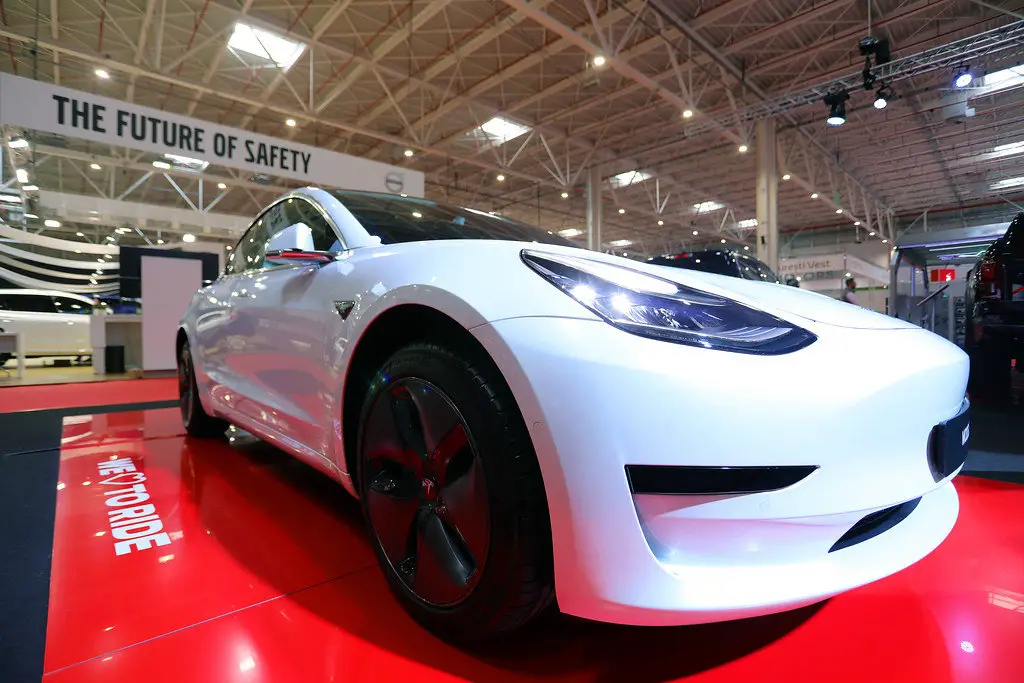
4. Tesla Model 3: The Electric Professional’s Choice
Starting MSRP: $40,000 | Long Range AWD: $47,000
The Tesla Model 3 represents a fundamentally different approach to luxury—minimalist design, electric propulsion, and technology-first philosophy. For professionals embracing electric vehicles or working in tech-forward industries, the Model 3 makes a strong statement.
What works: Operating costs are dramatically lower than gas-powered competitors—electricity costs roughly one-third of gasoline per mile, and maintenance is minimal (no oil changes, fewer brake replacements thanks to regenerative braking). Performance is exhilarating—even the base Model 3 accelerates briskly, while the Performance variant rivals true sports cars. Autopilot and Full Self-Driving capabilities (though still requiring driver attention) offer genuinely useful advanced driver assistance. Over-the-air updates continuously improve the vehicle, unlike traditional cars that become outdated the moment you drive off the lot.
The environmental angle matters professionally too. In many industries and social circles, driving electric signals environmental consciousness and forward-thinking values. For professionals in coastal cities or tech hubs, the Model 3 fits cultural expectations better than traditional luxury sedans.
What doesn’t: Interior quality and materials lag behind German competitors—the minimalist cabin feels sparse to some buyers, and build quality has been inconsistent. The ride quality is firm, sometimes harsh on broken pavement. Traditional luxury brands offer more comfort-focused experiences. Brand perception is polarizing—some view Tesla as innovative and aspirational, others see it as overhyped or politically charged.
Charging infrastructure, while improving, requires adjustment. You need home charging capability (adding $1,000-2,000 for installation) or access to workplace charging. Road trips require planning around Supercharger locations. For professionals who frequently drive long distances without predictable charging access, this creates complications.
Total cost of ownership (5 years): Approximately $52,000-58,000. Despite higher purchase price than some competitors, lower operating costs (fuel savings of $800-1,200 annually, minimal maintenance) significantly reduce total ownership costs. Depreciation has been unpredictable—Tesla’s frequent price changes affect resale values, though demand remains strong for used Model 3s.
Best for: Professionals in tech industries, environmental sectors, or coastal cities where electric vehicles are normalized. Those with home charging capability and primarily local/regional driving patterns. If your professional image benefits from association with innovation and environmental consciousness, the Model 3 delivers.
5. Lexus ES 350: Reliability Meets Refinement
Starting MSRP: $43,000 | Well-Equipped: $50,000
The Lexus ES represents the antithesis of German sport sedans—it prioritizes comfort, reliability, and serene luxury over driving dynamics. For professionals who view cars as refined transportation rather than driving experiences, the ES makes compelling sense.
What works: Reliability is legendary—Lexus consistently ranks at the top of dependability studies, and the ES specifically has proven exceptionally trouble-free. This translates to lower long-term costs and fewer unexpected problems disrupting your schedule. The ride quality is supple and quiet, isolating occupants from road imperfections. Interior quality is excellent with genuine materials and meticulous assembly.
Maintenance costs run significantly lower than German competitors. The ES uses a proven 3.5-liter V6 (302 horsepower) that’s been refined over decades—it’s smooth, reasonably powerful, and remarkably durable. Lexus dealer service experiences typically exceed German luxury brands—you’re treated well without the condescension some premium brands display.
What doesn’t: Handling is soft and disconnected—the ES prioritizes comfort over sport, which means it feels floaty in corners compared to BMW or Audi. The front-wheel-drive platform (most competitors are rear or all-wheel-drive) limits handling potential. Styling is conservative—the ES won’t turn heads like a BMW or Mercedes. Brand prestige, while strong, skews older demographically. Young professionals might find Lexus less aspirational than German brands.
Total cost of ownership (5 years): Approximately $58,000-63,000. The ES holds value exceptionally well, typically retaining 52-57% after five years—best in class. Low maintenance costs and excellent reliability significantly reduce ownership expenses over time.
Best for: Professionals who prioritize reliability and low stress ownership over driving excitement. Those who value serene comfort for long commutes. If you want a vehicle that will reliably start every morning, never surprise you with expensive repairs, and provide a quiet sanctuary during stressful workdays, the ES delivers peace of mind German brands can’t match.
6. Genesis G70: The Value Luxury Performance Sedan
Starting MSRP: $41,000 | 3.3T Sport: $52,000
Genesis, Hyundai’s luxury division, has emerged as a serious competitor offering German-level performance and features at lower prices. The G70 targets the BMW 3-Series directly, delivering sharp driving dynamics with aggressive pricing.
What works: The 3.3-liter twin-turbo V6 (365 horsepower in the 3.3T) provides genuinely thrilling performance rivaling BMW M340i at a fraction of the cost. Handling is sharp and engaging—Genesis hired former BMW engineers who clearly understood the assignment. Warranty coverage is exceptional—10 years/100,000 miles powertrain, 5 years/60,000 miles bumper-to-bumper, plus included maintenance for 3 years/36,000 miles.
Interior quality is excellent with genuine materials and attractive design. Technology features rival or exceed German competitors at this price point. The value proposition is compelling—a well-equipped G70 3.3T with features matching a $60,000 BMW costs $52,000-54,000.
What doesn’t: Brand recognition lags established luxury marques—many people don’t know Genesis exists or associate it with Hyundai. This limits professional image value for those who care about brand perception. Dealer network is smaller—finding service might require more effort than with BMW, Mercedes, or Lexus. Resale value remains unproven—Genesis is relatively new, and long-term depreciation is uncertain.
Total cost of ownership (5 years): Approximately $60,000-65,000. Lower purchase price offsets potentially higher depreciation. Included maintenance for three years significantly reduces early ownership costs. Insurance tends to run lower than German competitors.
Best for: Professionals who prioritize value and performance over brand prestige. Those confident enough to drive a lesser-known brand because they appreciate the actual product. If you want BMW-level driving dynamics without paying BMW prices—and don’t need the roundel for professional image—the G70 delivers exceptional value.
7. Acura TLX Type S: The Japanese Sport Sedan Alternative
Starting MSRP: $53,000 | Well-Equipped: $58,000
The Acura TLX Type S offers a middle path between German sport sedans and Japanese luxury comfort. It combines sharp handling with Honda reliability and features a powerful turbocharged V6.
What works: The 3.0-liter turbo V6 (355 horsepower) provides strong performance with the reliability Honda is known for. Super Handling All-Wheel Drive (SH-AWD) offers excellent traction and cornering capability, particularly valuable in poor weather. Build quality is excellent—Honda’s manufacturing standards ensure consistent assembly and materials.
Maintenance costs run significantly lower than German competitors while offering similar performance and features. Dealer service experiences are generally positive, and the brand has strong reliability history. The TLX looks aggressive and modern—it stands out more than the conservative Lexus ES.
What doesn’t: Brand prestige doesn’t match German or even Lexus—Acura struggles with identity and recognition. Interior, while well-built, uses some materials that feel less premium than competitors. The infotainment system with dual screens is polarizing—some find it confusing and outdated. Resale values are moderate, typically falling between Japanese and German competitors.
Total cost of ownership (5 years): Approximately $63,000-68,000. Lower maintenance costs offset moderate depreciation. The TLX typically retains 48-53% of value after five years.
Best for: Professionals who want sport sedan performance with Honda reliability. Those in climates where all-wheel-drive matters but who prefer more engaging driving than the Lexus ES offers. If you want a performance sedan that won’t drain your wallet in maintenance costs, the TLX Type S deserves consideration.
Making Your Decision: Which Luxury Car Fits Your Professional Life?
Choosing among these seven vehicles depends on your priorities, professional context, and personal preferences. Here’s how to think through the decision:
Choose the BMW 330i if: You prioritize driving engagement and want a vehicle that’s genuinely fun on winding roads. The BMW delivers the sharpest handling and most athletic character. Professional image is strong, and brand recognition is excellent.
Choose the Mercedes C-Class if: Comfort and brand prestige matter most. The Mercedes offers a more relaxed luxury experience with arguably the strongest badge recognition. Best for highway commuters who value serene cruising.
Choose the Audi A4 if: You need all-wheel-drive capability and appreciate sophisticated technology. The A4 balances sport and comfort while offering confidence in poor weather. It’s understated elegance for professionals who prefer substance over flash.
Choose the Tesla Model 3 if: You embrace electric vehicles and work in industries where environmental consciousness and innovation are valued. Lower operating costs and strong performance make it compelling for those with charging access.
Choose the Lexus ES if: Reliability and stress-free ownership top your priorities. The ES delivers exceptional dependability with serene comfort. Best for professionals who view cars as refined transportation rather than driving experiences.
Choose the Genesis G70 if: You want BMW-level performance without paying BMW prices and don’t need the prestige badge. The G70 offers exceptional value with thrilling driving dynamics and comprehensive warranty coverage.
Choose the Acura TLX Type S if: You want sport sedan performance with Honda reliability and all-wheel-drive capability. It splits the difference between German dynamics and Japanese dependability.
Beyond the Purchase: What Really Matters
The right luxury car for your professional life isn’t just about the vehicle itself—it’s about how it fits into your broader financial picture and career trajectory.
A $60,000 vehicle should represent a reward for professional achievement, not a stretch that compromises other financial goals. If buying this car means delaying retirement contributions, skipping emergency fund building, or carrying high-interest debt, you’re not ready regardless of which model appeals to you.
The best professionals understand that true wealth builds through assets that appreciate, not liabilities that depreciate. A luxury car is a tool—it should project appropriate success, provide reliable transportation, and ideally bring some joy to your daily commute. But it shouldn’t define your worth or consume resources better deployed toward investments that actually build wealth.
Consider whether leasing makes more sense than buying, understand total cost of ownership beyond the purchase price, and factor in how long you realistically plan to keep the vehicle. These financial considerations often matter more than the choice between BMW and Mercedes.
Conclusion: Strategic Vehicle Selection for Professionals
The seven vehicles profiled here represent the best luxury options under $60,000 for professionals in 2026. Each offers genuine luxury, strong performance, and features appropriate for business contexts. Your choice depends on whether you prioritize driving dynamics (BMW, Genesis), comfort and prestige (Mercedes, Lexus), technology and all-weather capability (Audi, Acura), or electric innovation (Tesla).
Visit dealers, test drive multiple options, and pay attention to which vehicle feels right for your daily routine and professional image. The best luxury car is the one that serves your actual needs while fitting comfortably within your financial capacity—not the one that stretches your budget to impress others.
Choose wisely, negotiate effectively, and enjoy the upgrade. A well-selected luxury vehicle enhances your professional life without compromising your financial future. That balance—between present enjoyment and long-term financial health—defines truly successful professionals.